The Swap Table Standard: Trading Corteiz in the UK Without Losing Out in 2026
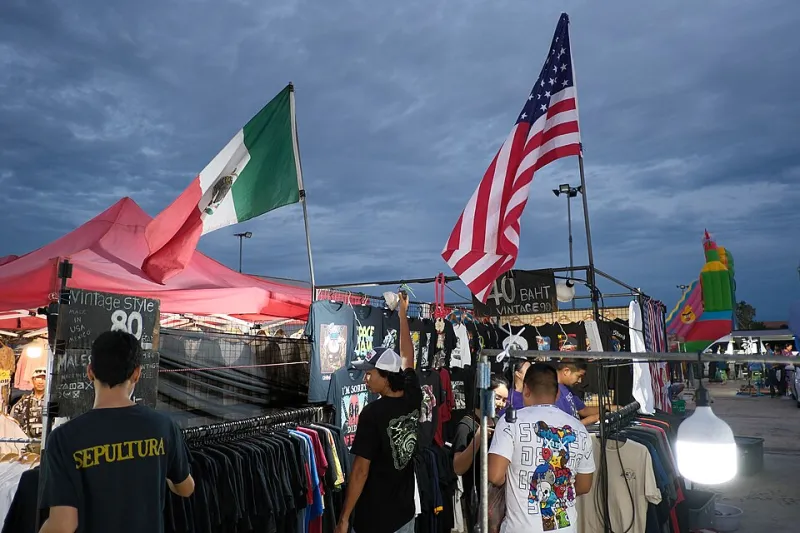
Photo: PattayaPatrol, CC BY-SA 4.0, via Wikimedia Commons
Cash gets all the attention. It is easy to measure, easy to screenshot and easy to argue about in a group chat. But a growing slice of the UK Corteiz scene is moving in the opposite direction: pieces changing hands through swaps, part-exchanges and face-to-face trades. The appeal is obvious. If you have a duplicate hoodie, a size that never quite worked or a colourway that lost its shine, a swap meet can turn dead stock into something you will actually wear. No checkout timer. No postage anxiety. Just a rail, a table and a conversation about what each piece is really worth.
The catch is that trades are messier than sales. A price is a price. A swap involves two people deciding that two different items are roughly equal, plus whatever cash makes up the gap. Get it right and you leave with a better capsule. Get it wrong and you have handed over a clean piece for something with a pulled seam and a story that does not add up. The playbook below is about keeping the trade fair, the mood friendly and the exit route clear.
Why the swap table is having a moment
Resale prices for sought-after Corteiz pieces have made the secondary market feel like a second retail market. That is fine if you are buying one grail. It is less fine if you are trying to build a wearable rotation on a normal budget. Swap meets solve a different problem: they let people rebalance what they already own. The person who bought two sizes in the same drop can trade one. The person who has moved on from a loud piece can trade into something quieter. The person who missed a drop can trade a strong duplicate from an older release.
The UK circuit is not one big organised event. It is a patchwork of pub back rooms, community halls, skatepark side rooms and campus common spaces, usually advertised through group chats and local accounts. Some are informal: five people, a couple of rails and a Saturday afternoon. Others are more structured, with check-in tables, mirrors and a rule that every trade gets photographed before anyone leaves. Either way, the culture is the same. Bring something clean, know what you have and do not treat the table like a car boot sale.
Value the trade, not the label
The first mistake at any swap meet is treating the tag as the whole story. A piece is worth what someone will trade for it on the day, in that room, in that condition, in that size. That is not the same as the highest price you have seen online. Before you leave the house, build a simple value picture: recent sold prices for your piece, recent sold prices for the piece you want, the gap between them and the condition of both. If you are trading a hoodie for a tee, expect a cash top-up. If you are trading two mid-level pieces for one stronger piece, be honest about whether the other person actually wants two pieces or is just being polite.
Condition matters more than people admit in the moment. A faded black hoodie and a crisp black hoodie are not the same trade, even if the labels match. Check seams, cuffs, necklines, prints and any signs of shrinking. Ask how it has been washed. Ask whether it has been altered. A simple rule: if you would not pay your own money for it in that condition, do not accept it as an equal trade.
The three-way swap maths
Most fair trades are not straight swaps. They are piece plus cash plus condition, and all three need to balance. A useful way to think about it is to set a walk-away value before you arrive. Say you are trading a hoodie you value at £180. You want a piece you value at £220. A £40 top-up from you is reasonable if the condition is comparable. If the other piece has a flaw, the top-up should shrink or disappear. If your piece is the cleaner one, the top-up should move the other way.
Do not let the cash part get vague. “Sort it later” is how friendships get tested. Count the top-up before the pieces leave the table. If someone says they will bank transfer you when they get home, treat that as a red flag unless you know them well. The same goes for “I will bring the other item next time.” A swap meet is a one-visit transaction. If it is not on the table, it is not part of the trade.
Red flags at the rail
Bad-faith swaps rarely announce themselves. They usually arrive as small pressures. Someone pushes you to decide quickly because “there are three other people interested.” Someone gets annoyed when you ask about receipts or labels. Someone offers a piece that looks right in photos but has a replacement zip, a suspiciously fresh print or a wash tag that does not match the release. None of these are proof of anything on their own, but together they are a reason to slow down.
The other classic is the bait-and-switch. You agree to trade for one piece, then the other person arrives with a different one and a reason why the original “fell through.” Sometimes that is genuine. Often it is a test to see if you will accept less because you have already travelled. You are allowed to say no. You are allowed to walk around the room and trade with someone else. A swap meet is not a contract until the pieces are in hands.
Etiquette that keeps you invited back
Bring clean pieces. That sounds obvious, but the standard at UK swap meets is not the same as a shop rail. Wash what you are trading, check the pockets, and fold it properly. Bring measurements if you can, especially for hoodies and cargos, because sizing across seasons can shift. Be upfront about flaws before someone asks. A small mark that you disclose is a normal part of second-hand trading. A small mark that they discover later is a reputation problem.
Also, do not hog the table. Swap meets work because people cycle through, ask questions and make offers. If you are not trading, move aside. If you are trading, keep the conversation about the piece, not the person. And bring a friend if you are meeting in a pub or a hall you do not know. Two pairs of eyes are better than one when someone is trying to rush a deal.
Build a capsule, not a collection
The best swap meets are not about winning a single trade. They are about improving the whole wardrobe. That might mean trading a loud piece you never wear for a neutral layer that fills a gap. It might mean swapping a size you have outgrown for the size you actually need. It might mean combining two duplicates into one stronger piece and a small cash top-up that funds your next drop. The goal is not to own more Corteiz. It is to own the right Corteiz for the way you actually dress.
So before you go, look at your rail and ask what is doing no work. Then ask what would do more. A swap meet gives you a route between those two points without another checkout screen. Treat the table fairly, value the piece honestly and keep your walk-away rule close. The trade you do not make is often the one that saves your capsule.